
In 2019, PraiseCharts started reviewing its own top-downloaded worship charts on a rolling basis, listening to the track and checking each one against it measure for measure. The errors they kept finding were the same handful every time: "wrong lyrics, wrong chords, spelling mistakes, misplaced chords, unclear rhythms, missing lyrics" (PraiseCharts, Taking Chord Charts to the Next Level, retrieved 2026-07-17). If a company that reviews charts professionally still finds these chord sheet mistakes, the odds are good a few are hiding in yours too.
Most of these mistakes are invisible on the screen. They only show up mid-song, when the chart doesn't match what your hands expect and you're out of time to fix it. This guide covers seven specific, fixable chord sheet mistakes — pulled by cross-referencing four independent chord-charting guides, not one writer's opinion.
Key Takeaways
- Chords that drift from their syllable are the most-cited mistake across every guide reviewed (Guitar Wiz).
- Mixing chord spellings (Em7 vs. Em-7) forces a reader to re-parse notation mid-song instead of recognizing it instantly.
- A chart missing key, tempo, or capo position costs rehearsal time before the first note is even played.
- Repeat notation like "x2" is only safe when the repeat is truly identical — otherwise it hides exactly the change a performer needs to see.
Chords Aligned to the Wrong Syllable
The single most-cited chord chart mistake, across every guide reviewed for this piece, is a chord symbol that doesn't sit directly above the syllable where the change happens. Guitar Wiz puts it bluntly: "Don't place chords between words - it's unclear when to change."
On paper, that ambiguity is annoying. Live, it's the difference between hitting the change on time and guessing a beat late. A reader has no time to interpret a chord floating between two words when the band is already moving.
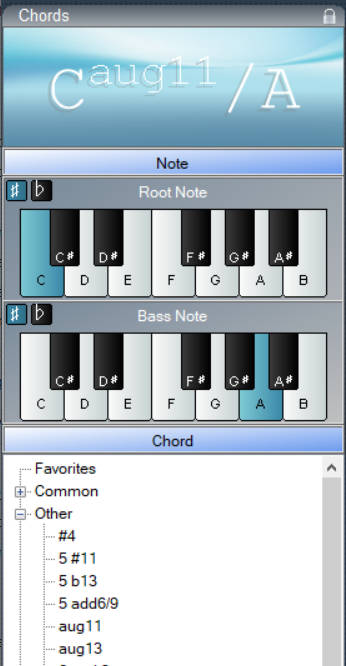
This is one of the reasons Chordastic's chord editor works by clicking or dragging a chord to the exact syllable, rather than typing it into open text and hoping the spacing lines up. It removes the guesswork at the point of entry instead of relying on careful proofreading later.
For the full mechanics of placing chords correctly — including how autofill handles repeats — see our complete guide to creating chord sheets.
Inconsistent Chord Spelling
Mixing Em7 and Em-7, or Cmaj7 and CM7, in the same chart forces a reader to re-parse each symbol instead of recognizing it on sight. Guitar Wiz recommends picking one form per chord type and applying it consistently: Em7, not Em-7; Cmaj7, not CM7.
It sounds like a small thing until you're sight-reading at tempo. A chord symbol you recognize instantly costs zero attention. One you have to decode costs a fraction of a second — and a fraction of a second is exactly what you don't have between the last line and the next.
Pick a convention before you start the chart, not partway through it. Consistency matters more than which convention you pick.
Section Labels That Aren't Clearly Marked
Mixing [Verse], VERSE, and verse in the same document undermines the one job section labels have: letting a performer find their place at a glance. Both Guitar Wiz and The Song Foundry call for the same fix — consistent bracketed markers such as [Verse], [Chorus], and [Bridge], with every new section starting on its own line rather than picking up mid-line.
Why does the bracket format matter more than the label wording? Because it's a visual pattern your eye learns to scan for, the same way a comma or a period is. Break the pattern halfway through the chart and the scanning breaks with it.
Notice that this is the same underlying failure as the chord-spelling mistake above: an inconsistency that costs nothing when you're writing the chart and costs real attention when you're reading it under pressure. That pattern — cheap to create, expensive to read — shows up in three of the seven mistakes on this list.
A Chart With No Key, Tempo, or Capo Listed
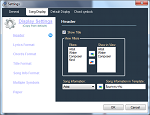
Omitting key, tempo in BPM, and capo position from the header leaves every reader guessing at exactly the details a band needs before playing a single note. Guitar Wiz lists song title, key, tempo, capo position, and feel or style as the non-negotiable header fields.
This isn't just a formatting problem, it's a preparation problem. A drummer who doesn't know the tempo until walking into rehearsal has already lost the time they'd have spent internalizing the groove. Put the header fields at the top, every time, even for songs you think everyone already knows.
Chordastic captures all of this in one place. For the full list of header and song-metadata fields, see the Chordastic manual.
Repeat Notation That Hides What Actually Changes
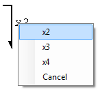
Shorthand like "repeat chorus" is a trap the moment the chords, lyrics, or instrumentation shift even slightly on the repeat. chordsheet-maker.com warns against exactly this: don't lean on a repeat marker when one of the parts actually differs from the first time through.
The trade-off is real. Writing out every repeat in full costs page space, the same space the two-column layout guide covers in detail. But there's a middle path. A tool that autofills chords into identical repeats automatically gets the space savings without the risk. It only fires on exact text matches, so if the second chorus has changed, it won't get silently copied.
Here's a simple way to see the difference. Take a song with a chorus repeated three times, eight chord placements per chorus. Typing each repeat by hand means proofreading 24 placements for drift. Autofilling the exact repeats means checking 8 — the first occurrence only, since the other two are guaranteed to match it.
Chordastic's Autofill Repeating Lyrics feature works this way: it detects matching text and copies chords from the first occurrence, so drift never gets a chance to hide behind a repeat marker.
Uneven Page Turns Mid-Section
A page or column break that lands in the middle of a verse forces a performer to flip pages exactly when they can least afford to look away. The Song Foundry recommends planning breaks at section boundaries instead. Most players realistically need a few seconds to turn a page cleanly, and a mid-verse break doesn't give them that time.
This is the general version of the problem. Two-column layouts in particular develop wasted whitespace at the bottom of a column, which is a specific enough case that our full guide to the two-column layout covers it on its own.
Fonts and Spacing That Collapse Under Pressure
A "fancy" font or cramped spacing that looks fine on a screen at arm's length often fails on a music stand under stage lighting. Every guide reviewed for this piece independently recommends the same fix: a simple, clean font such as Arial, Times, or Georgia, with consistent whitespace between sections.
Spacing has a rule of thumb too. Single-space lyrics within a section, double-space between sections, and keep four or eight measures per line with a blank line separating sections (The Song Foundry and chordsheet-maker.com independently recommend the same spacing). Evenly spaced measures simply read faster than cramped ones.
How We Chose These Seven
These seven mistakes are the ones that showed up independently across at least two of three chord-charting guides reviewed for this piece. The three: The Song Foundry (session and studio charts), chordsheet-maker.com (general chord and lead sheets), and Guitar Wiz (guitar-specific charts). PraiseCharts' own admitted error list, drawn from reviewing thousands of worship charts, backs up the same handful of issues.
That convergence is the actual evidence here. Three sources covering three different performance contexts landing on the same handful of errors is a stronger signal than any single writer's opinion, no matter how confident it sounds.
Frequently Asked Questions
What's the single most common chord chart mistake?
A chord symbol that doesn't sit directly above the syllable where the change happens. Every chord-charting guide reviewed puts this at the top of its own list of chord sheet mistakes. It's the error most likely to cause an actual wrong note live, not just a cosmetic slip on the page.
How should I spell chord symbols consistently?
Pick one form per chord type and use it throughout the chart: Em7, not Em-7; Cmaj7, not CM7. A reader recognizes a consistent symbol instantly instead of re-parsing it mid-song, which matters most exactly when you have the least time to spare.
What should a chord chart header always include?
Song title, key, tempo in BPM, capo position, and a feel or style descriptor. A band member who doesn't know the key or tempo before the first note has already lost rehearsal time they could have spent internalizing the song.
Should I use repeat notation like "x2," or write out every repeat in full?
Only use shorthand repeat notation when the repeat is truly identical. If chords, lyrics, or instrumentation shift even slightly, write it out in full. Or use a tool that autofills exact repeats automatically, so drift doesn't get hidden behind a repeat marker.
Getting Started
Three of these seven mistakes trace back to the same root cause: something that's free to create and expensive to read. Inconsistent chord spelling, unclear section labels, and hidden repeat drift all cost nothing when you're writing the chart and everything when you're performing from it.
Chordastic's chord editor, symbol settings, and autofill exist specifically to catch these before they reach the stage. Download Chordastic for free and check your next chart against this list. Starting from scratch? Read the complete guide to creating chord sheets, or browse more screenshots first.
Sources
- PraiseCharts, Taking Chord Charts to the Next Level in 2020, retrieved 2026-07-17, https://www.praisecharts.com/blog/taking-chord-charts-to-the-next-level-in-2020/
- Guitar Wiz, How to Write Chord Charts for Guitar: A Complete Guide, retrieved 2026-07-17, https://guitarwiz.app/articles/how-to-write-chord-charts-guitar/
- chordsheet-maker.com, Chord Sheets and Lead Sheets: Best Practices, retrieved 2026-07-17, https://www.chordsheet-maker.com/blog/chord-sheets-and-lead-sheets-best-practices
- The Song Foundry, Presentation Counts, retrieved 2026-07-17, https://thesongfoundry.com/presentation-counts/